AI in Regulated Labs: Why Trust, Traceability, and Governance Matter More Than Hype
August 10, 2026



The demo everyone has seen
By now most lab leaders have watched the same demonstration. Someone types a question in plain language, and a moment later an answer appears, complete and confident. It is a good show. It is also the easiest part of the problem to solve. The hard question is never whether a system can produce an answer. It is whether that answer can be trusted, traced, and defended when it matters. In a regulated lab, an answer nobody can explain is not an asset. It is a liability wearing a friendly interface.
AI amplifies the foundation it sits on
There is a quiet assumption in a lot of lab technology conversations right now: that a capable enough model will make up for the state of the underlying data. It will not. AI does not rise above the foundation it is given. It magnifies it. A lab that still copies results from an instrument to a spreadsheet, that hands work between systems no one logs, and that cannot show a continuous chain of custody will not get better decisions from AI. It will get faster noise, produced with more conviction and harder to catch.
The order of operations is the whole point. Eliminate the manual transcription that lets a value drift from its source. Connect the systems, from the instrument and the scientific data management system (SDMS) to the LIMS, so that every handoff is owned and recorded. Establish traceability so that every result points back to where it came from. Only then does an added intelligence layer have something trustworthy to reason over. The labs that will get the most from AI are not the ones that adopt it first. They are the ones that fixed the foundation first.
Governance is the second act
Suppose the foundation is sound. The next question is governance, and it is the one most demonstrations skip. In a regulated GxP environment, a system that reasons over lab data has to answer four plain questions. Where did this answer come from, meaning which controlled sources it used. Can the answer be shown with its citations rather than asserted. Is every interaction logged, so a reviewer can reconstruct what the system did and why. And are access levels enforced, so the system can only see and act on what the person using it is allowed to. Strip those four away and what is left is an ungoverned chat window pointed at regulated data, which is precisely what a quality director is trained to distrust.
This is where the market splits. A great deal of lab AI messaging today leads with autonomy, with the idea of a system that decides and acts on its own. In a good manufacturing practice environment, that framing raises the hair on the back of a quality leader's neck, and it should. The useful frame is the opposite one. The value is not a system that removes the human from the decision. It is a system that accelerates the human while keeping every action attributable to a person, versioned, and reviewable. Human accountability, machine speed. That is a claim a regulated lab can actually stand behind.
Promise versus practice
The gap between the promise and the practice of lab AI is not really about the models. It is about everything around them. A promise is a sentence on a homepage. A practice is a capability that is shipped, validated, and in production, with a record of what it did that an auditor could inspect. When a vendor shows an impressive answer, the fair follow up is not whether the answer is clever. It is whether the vendor can show the answer's sources, the log of the interaction, and the access controls that governed it. If those exist, the practice matches the promise. If they do not, the demonstration was theater.
None of this means a lab should wait. It means a lab should sequence. Fixing the data foundation is valuable on its own, before any intelligence layer is added, because it reduces manual effort and risk at the same time. Industry analysis of digitized quality control labs points in a consistent direction here. McKinsey, in its 2019 study of the future of pharmaceutical quality control, estimated that digitization use cases in those labs demonstrated more than a 65 percent reduction in deviations, and gave early Industry 4.0 lab use cases productivity increases in the range of 30 to 40 percent. Those are estimates for pharmaceutical quality control labs, not universal guarantees, but they describe the mechanism plainly: connect and clean the foundation, and both risk and manual effort fall together. That is worth doing whether or not a single AI feature is ever switched on.
The question worth asking
The honest version of the lab AI conversation is not which vendor has the most advanced model. It is which vendor can show you the plumbing underneath the answer. So the question a lab should carry into every demonstration is simple. When your system gives me an answer, can you show me where it came from, who was allowed to ask, and the record of what it did? A vendor who can answer that is describing a practice. A vendor who changes the subject is describing a promise.
Where this lands for Confience
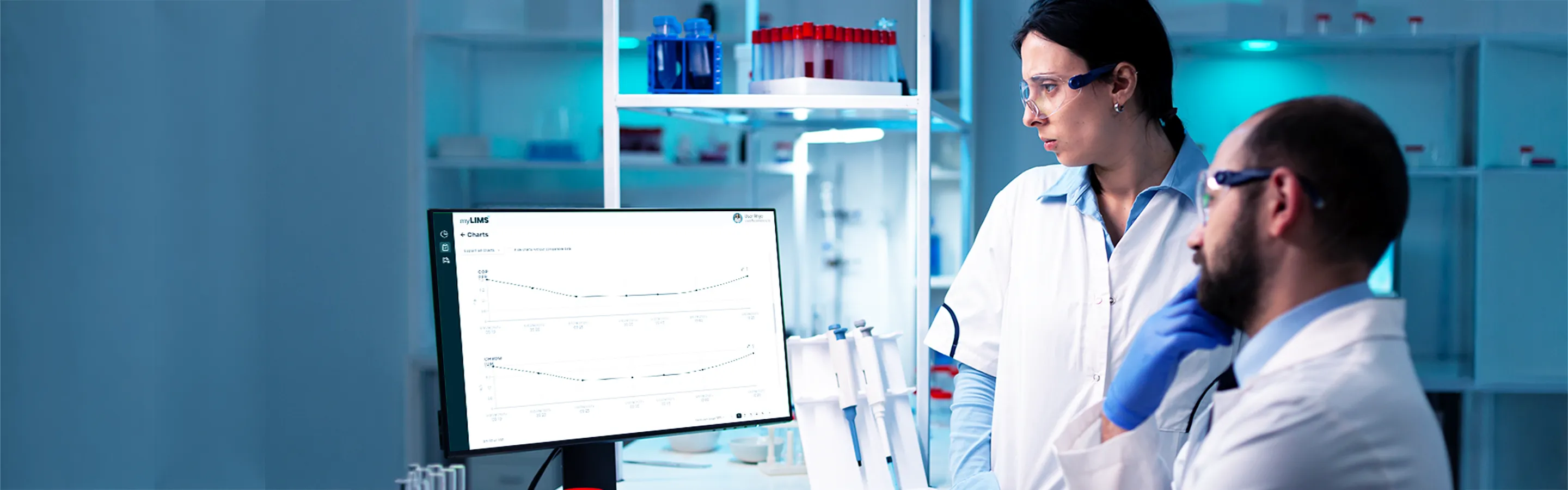
This is the argument behind how myLIMS, the Confience laboratory information management system (LIMS), is built and how Confience approaches intelligence in the lab. The point of connecting systems, removing manual transcription, and holding one continuous chain of custody is not to win an AI demonstration. It is to make the trustworthy record the only record, so that any capability added on top of it inherits that trust rather than undermining it. And it is why the work is guided by people who understand the customer's science, not handed over to a system that pretends to.